Showing posts with label George Orwell. Show all posts

Monday, December 12, 2011

2011.12.11 - Waiting for Godot — Finished 2011.11.21


Samuel Beckett.
Waiting for Godot: A Tragicomedy in Two Acts.
New York: Grove Press, Inc. 1954. [Now Grove/Atlantic: ISBN 978-0-8021-4442-3.]

I am struggling to begin this review. But, before I do, WfG gets from me a solid ★★★★★ out of ☆☆☆☆☆. In fact, it was so good that as soon as I finished it the first time, I promptly re-read it.

My struggle is between being too glib: "This is a brilliant metaphor for the condition our human condition has conditioned us to unconditionally accept" — to being too dismissive, such as was expressed by a co-worker who, upon learning I was reading Godot, said "I watched it on TV. It was great! A great play about nothing." Now I suspect that because he reacted to 'nothing' so strongly that his unconscious did not in anyway find it to be empty.

And so it, is, that despite an ostensible appearance that it is about nothing, nothing is further from the truth. WfG is definitely not about nothing. The metaphors are nearly endless,
from the simple ones such as the too small boots pinching the feet — constricted understanding hobbles psychological/emotional movement. Beckett even extends that to include putting on another's boots in the hopes of acquiring the ability to walk with less discomfort, metaphor for putting on another's ideas.

I haven't gone onto the web to search for the likely endless reams of ideas this play has generated. Nor do I want to do a review of the play, as such. Instead I would like to briefly concentrate on the character Lucky. [Note: I will discuss this role in some detail, so if you want to be surprised by Lucky in the play, do not read on before reading the play.]

Lucky comes onto the stage with a noose around his neck carrying a collection of stuff. The end of the rope extends out of sight, off stage, making Pozzo, Lucky's master, initially invisible. (Is that the smallest of hints of Adam Smith's Invisible Glove?) Pozzo controls Lucky with the use of the noose, via jerks (Lucky has open sores from it), and with a whip and short, usually one word, commands such as the On! and Back! that introduce the pair. Later, Pozzo wants to put Lucky's intellectual prowess, specifically his ability to think, on display for Estragon and Vladimir, the pair waiting for Godot:
POZZO: Stand back! (Vladimir and Estragon move away from Lucky. Pozzo jerks the rope. Lucky looks at Pozzo.) Think, pig! (Pause. Lucky begins to dance.) Stop! (Lucky stops.) Forward! (Lucky advances.) Stop! (Lucky stops.) Think!

(Silence.)

LUCKY: On the other hand with regard to—
[I blogged this section more extensively as part of a peculiar fushigi @ Godot, Ballet, Pocket Watch & Alice.]

This has particular resonance for me because of a recent employee motivational propaganda campaign I (and at least several thousands of others) were subjected to. It was comprised of a series of 3 posters and their electronic facsimile being festooned across the offices. The posters were comprised of two parts. The top half was a single word, a command: Say, Stay, Strive. The balance were terse reasons for obeying the command, for the last two, and what to say for the first one.

Less specifically, the extended thinking that Lucky expresses is, of course, a perfect metaphor for what passes
for thinking through the news media and many official journals: a huge pile of impressive sounding phrases that at best hide the truth but at worst promulgate false truths and ideology. And all co-mingled with a curious obsession about sports. [I wonder if Beckett was influenced by some of George Orwell's pointed criticism of the media and much intellectual thought, such as he delineated in Homage to Catalonia? Wikipedia does not reference such a connection.]

But why does Lucky stay with the physically and verbally abusive Pozzo? He is, ostensibly, a free man. Pozzo even ascribes to him freedom. Well, the answer is an interesting one, and reminds me of the current batch of presidential candidates who blame the poor for being poor because if they didn't want to be poor they could work themselves out of it. Here's Pozzo's reasoning for Lucky's enslavement to him:
POZZO: Ah! Why couldn't you say so before? Why he doesn't make himself comfortable? Let's try and get this clear. Has he not the right to? Certainly he has. It follows that he doesn't want to. There's reasoning for you. And why doesn't he want to? (Pause.) Gentlemen, the reason is this.

VLADIMIR: (to Estragon). Make a note of this.

POZZO: He wants to impress me, so that I'll keep him.

ESTRAGON: What?
POZZO: Perhaps I haven't got it quite right. He wants to mollify me, so that I'll give up the idea of parting with him. No, that's not exactly it either.

VLADIMIR: You want to get rid of him?

POZZO: He wants to cod me, but he won't.

VLADIMIR: You want to get rid of him?

POZZO: He imagines that when I see how well he carries I'll be tempted to keep him on in that capacity.

ESTRAGON: You've had enough of him?

POZZO: In reality he carries like a pig. It's not his job.

VLADIMIR: You want to get rid of him?

POZZO: He imagines that when I see him indefatigable I'll regret my decision. Such is his miserable scheme. As though I were short of slaves! (All three look at Lucky.) Atlas, son of Jupiter! (Silence.) Well, that's that, I think. Anything else?

(Vaporizer.)

VLADIMIR: You want to get rid of him?

POZZO: Remark that I might just as well have been in his shoes and he in mine. If chance had not willed otherwise. To each one his due.

VLADIMIR: You waagerrim?

POZZO: I beg your pardon?

VLADIMIR: You want to get rid of him?

POZZO: I do. But instead of driving him away as I might have done, I mean instead of simply kicking him out on his arse, in the goodness of my heart I am bringing him to the fair, where I hope to get a good price for him. The truth is you can't drive such creatures away. The best thing would be to kill them.

(Lucky weeps.)

ESTRAGON: He's crying!

POZZO: Old dogs have more dignity. (He proffers his handkerchief to Estragon.) Comfort him, since you pity him. (Estragon hesitates.) Come on. (Estragon takes the handkerchief.) Wipe away his tears, he'll feel less forsaken.

(Estragon hesitates.)

VLADIMIR: Here, give it to me, I'll do it.

(Estragon refuses to give the handkerchief.)

(Childish gestures.)

POZZO: Make haste, before he stops. (Estragon approaches Lucky and makes to wipe his eyes. Lucky kicks him violently in the shins. Estragon drops the handkerchief, recoils, staggers about the stage howling with pain.) Hanky!

(Lucky puts down bag and basket, picks up handkerchief and gives it to Pozzo, goes back to his place, picks up bag and basket.)

ESTRAGON: Oh the swine! (He pulls up the leg of his trousers.) He's crippled me!

POZZO: I told you he didn't like strangers.

Interesting. Lucky has enslaved himself in order to appease his master, to be liked enough to be seen as worthy by Pozzo.

So why did Lucky kick Estragon in the shins? As I have been thinking about this, it struck me that Lucky's behaviour corresponds exactly with those who have fully submitted to their lot in life. My first realization of this tickled out from Noam Chomsky's reference to the 'benevolence' expressed by industrialist and philanthropist Andrew Carnegie to 'his' workers in 1896:

These are the fruits of the fierce corporate campaign undertaken as soon as American workers finally won the right to organize in the mid-1930s, after long years of bitter struggle and violent repression
unmatched in the industrial world. Perhaps we may even return to the days when the admired philanthropist Andrew Carnegie could preach the virtues of "honest, industrious, self-denying poverty" to the victims of the great depression of 1896, shortly after he had brutally crushed the steel workers union at Homestead, while announcing that the defeated workers had sent him a wire saying, "Kind master, tell us what you wish us to do and we will do it for you." It was because he knew "how sweet and happy and pure the home of honest poverty is" that Carnegie sympathized with the rich, he explained, meanwhile sharing their grim fate in his lavishly appointed mansions fn37 (37. Sexton, Patricia Cayo. The War on Labor and the Left Westview 1991, p83f.)

So a well-ordered society should run, according to the "vile maxim of the masters." (Year 501: The Conquest Continues, pg. 56-7).
Eventually, the people brutalized recognize the futility of fighting it, and so beat anyone who might offer them hope as being trouble makers or a threat to the status quo. Social critic and comic Bill Maher makes frequent reference to the American labourer who descries as a kind of evil the benefits European workers get in terms of time off, health, paternal benefits, etc. instead of struggling to achieve them for themselves.

Similarly, in the movie Guess Who's Coming for Dinner the parents actively dissuade the interracial couple because there would be trouble for the couple and their parents, too. Freedom roped off with fear.

Lucky is Estragon and Vladimir. Lucky is enslaved to Pozzo by choice — more specifically having chosen willingly or not to accept the lack of choice — not the rope. Estragon and Vladimir are enslaved to the hope of Godot providing them their direction in life.

The metaphors are obvious: we make our choices to remain as we are, whether we are societally successful or not, by accepting the situation we find ourselves in by submitting to choices others have made for us, then hoping that abandoning our Selves to those seen or unseen others will bring us succour.

The challenge, here, is twofold. The courage to see things exactly as they are within ourselves and in the society, and the wisdom to know what can and cannot be changed. I have no idea how either of these things are done.

This play is endlessly rich in meaning. I would now like to see it, and to produce an amateur production of it — or perhaps a reading. Hmmmm.

Tuesday, December 7, 2010

The Collected Essays, Journalism & Letters of George Orwell V2 — Re-Visited 2010.12.07

Begun 2009.03.28

I took with me Orwell's Collected Essays when I ventured out this morning because I was my wife's chauffeur and I knew I'd have some down time. While I waited for her, I let my fingers take me to '36. Review of Burnt Norton, East Coker, The Dry Salvages by T.S.Eliot(272-79).
Orwell gave these poems a mixed to negative review, comparing them unfavourably to Eliot's earlier works. He suggests that Eliot sold out to religion, as he grew older, as an aid to coping with the meaningless of life with which he had struggled. Nothing too 'shocking' in that, but what really caught my thoughts was the subtle acuity of Orwell's well written reading-between-the-lines. It was so good, I here share an extract from it.
...
So long a man regards himself as an individual, his attitude towards death must be one of simple resentment. And however unsatisfactory this may be, if it is intensely felt it is more likely to produce good literature than a religious faith which is not really felt at all, but merely accepted against the emotional grain.
... Mixed up with [these poems being about certain localities] is a rather gloomy musing upon the nature and purpose of life, with the rather indefinite conclusion I have mentioned above. Life has a 'meaning', but it is not a meaning one feels inclined to grow lyrical about; there is a faith, but not much hope, and certainly no enthusiasm. Now the subject-matter of Mr Eliot's early poems was very different from this. They were not hopeful, but neither were they depressed or depressing. If one wants to deal in antitheses, one might say that the later poems express a melancholy faith and the earlier ones a glowing despair. They were based on the dilemma of modern man, who despairs of life and does not want to be dead, and on top of this they expressed the horror of an over-civilized intellectual confronted with the ugliness and spiritual emptiness of the machine age. ... Clearly [his older] poems were an end-product, the last gasp of a cultural tradition, poems which spoke only for the cultivated third-generation rentier for people able to feel and criticize but no longer able to act. E.M. Forster praised 'Prufrock' on its first appearance because 'it sang of people who were ineffectual and weak' and because it was 'innocent of public spirit' (this was during the other war, when public spirit was a good deal more rampant than it is now). The qualities by which any society is to last longer than a generation actually has to  be sustained — industry, courage, patriotism, frugality, philoprogenitiveness — obviously could not find any place in Eliot's early poems. There was only room for rentier values, the values of people too civilized to work, fight or even reproduce themselves. But that was the price that had to be paid, at any rate at that time, for writing a poem worth reading. The mood of lassitude, irony, disbelief, disgust, and not the sort of beefy enthusiasm demanded by the Squires and Herberts, was what sensitive people actually felt.
It is fashionable to say that in verse only words count and the 'meaning' is irrelevant, but in fact every poem contains a prose meaning, and when the poem is any good it is a meaning which the poet urgently wishes to express. All art is to some extent propaganda [my emphasis]. ...
But the trouble is that conscious futility is something only for the young. One cannot go on 'despairing of life' into a ripe old age. One cannot go on and on being 'decadent,' since decadence means falling and one can only be said to be falling if one is going to reach the bottom reasonably soon. Sooner or later one is obliged to adopt a positive attitude towards life and society. It would be putting it too crudely to say that every poet in our time must either die young, enter the Catholic church, or join the Communist Party, but in fact the escape from conscious futility is along those general lines. There are other deaths besides physical death, and  there are other sects and creeds besides the Catholic Church and the Communist Party, but it remains true that after a certain age one must either stop writing or dedicate oneself to some purpose not wholly aesthetic. Such a dedication necessarily means a break with the past...
Eliot's escape from individualism was into the Church, the Anglican Church as it happened. One ought not to assume that the gloomy Pétainism to which he now appears to have given himself over was the unavoidable result of his conversion. The Anglo-Catholic movement does not impose any political 'line' on its followers... In theory it is still possible to be an orthodox religious believer without being intellectually crippled in the process; but it is far from easy, and in practice books by orthodox believers usually show the same cramped, blinkered outlook as books by orthodox Stalinists or others who are mentally unfree. The reason is that the Christian churches still demand assent to doctrines which no one seriously believe in...
I do not know, but I should imagine that the struggle with meanings would have loomed smaller, and the poetry would have seemed to matter more, if he could have found his way to some creed which did not start off by forcing one to believe the incredible (275-8).
A very interesting comment. And, in a curious fushigi*-ness, the section I emphasized corresponds to a comment a made in the web based social group, Goodreads to a poet-wannabe. It involved the purpose of poetry being (or not being) to impart a message:


I elaborated later on:
¡ POETRY ! group. Nov 29, 2010 09:54pm
...
And I feel the impulse to comment on your question, with acknowledgement to and affirmation of Julie George's comment — we — meaning the readers — are the message. The need for language to speak a common language is essential to understanding, of course, otherwise words would be gibberish (or babel, if you prefer). But beyond what I am tempted to call 'basic' understanding skills, language of the heart and soul speaks to the individual's heart and soul uniquely. One person's sea of love is another's wave of virility.
...

I have put this as a fushigi because Orwell takes a stand 180 degrees from my argument in the comment he made about writing, as I've emphasized above. So, who's right? Both? Neither? I am tempted to suggest that capital 'L' Life has no problem at all holding contradictory truths simultaneously, and that it is only the limits of rational mind that finds this problematic. And by a great leap of irrational argumentation, I suggest that Orwell's argument, in contradicting my — and, let's face it, not my argument but that of the Taoist philosophers — is in fact the Taoist contention that Tao is beyond words truthful or false:

If words were satisfactory, we could speak the whole day and it would all be about the Way [Tao]; but if words are unsatisfactory, we can speak the whole day and it will all be about things. The Way is the delimitation of things. Neither words nor silence are satisfactory for conveying it. Without words and without silence, our deliberations reach their utmost limits.
     — Chuang-Tse

Sunday, December 5, 2010

The Collected Essays, Journalism & Letters of George Orwell V2: Visited 2010.12.04

The other day I dipped into Orwell's Collected essays. I first opened it 2009.03.28, with full awareness that this was a book to be dipped into when whim fancied it. 
Penguin Books 1970. (No ISBN in my copy.)

My whim took me to an interesting page because it, fushigi*-like, ties in with the economics course I am writing. The course, which I've called it 'Economics Demystified,' [link not live to the web yet], has been contracted by my local Continuing Education program. So I'm now moiling over the course details, and a part of that moiling has resulted in my including on the course's web page that I'm creating, a page called 'Found Economics.' As a result of my little dip into Orwell, I have now, with chance and fingers, found my second inclusion:
The history of British relations with Mussolini illustrates the structural weakness of a capitalistic state. Granting that power politics are not moral, to attempt to buy Italy out of the Axis — and clearly this idea underlay the British policy from 1934 onwards — was a natural strategic move. But it was not a move which Baldwin, Chamberlain and the rest of them were capable of carrying out. It could only have been done by being so strong that Mussolini would not dare to side with Hitler. This was impossible, because an economy ruled by the profit motive is simply not equal to re-arming on a modern scale. Britain only began to arm when the Germans were in Calais. Before that, fairly large sums had, indeed, been voted for armaments, but they slid peaceably into the pockets of the shareholders, and the weapons did not appear. Since they had no intention of curtailing their own privileges, it was inevitable that the British ruling class should carry out every policy half-heartedly and blind themselves to the coming danger. But the moral collapse which this entailed was something new in British politics. In the nineteenth and early twentieth centuries, British politicians might be hypocritical, but hypocrisy implies a moral code. It was something new when Tory M.P.s cheered the news that British ships had been bombed by Italian aeroplanes, or when members of the House of Lords lent themselves to organized campaigns against the Basque children who had been brought here as refugees (365-6).

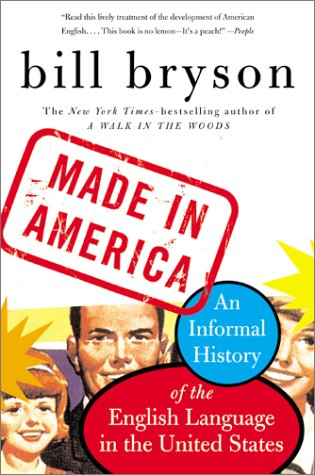
I consider this a fushigi* because not only does his critique of capitalism correspond with one of the arguments I will be presenting in the course, but more amusingly it absolutely corresponds to my first 'Found Economics', which came from Bill Bryson's Made in America
The dropping of atomic bombs on Hiroshima and Nagasaki marked the end of one war and the beginning of another: the cold war. The cold may not have generated a lot of casualties, but it was nonetheless the longest and costliest war America has ever fought. War was unquestionably good for business – so good that in 1946 the president of General Electric went so far as to call for a 'permanent war economy.' he more or less got his wish. Throughout the 1950s,America spent more on defense than it did on anything else – indeed, almost as much as it did on all things together. By 1960, military spending accounted for 49.7 percent of the federal budget – more than the combined national budgets of Britain, France, West Germany, and Italy. Even America's foreign aid was overwhelmingly military. Of the $50 billion that America distributed in aid in the 1950s, 90 percent was for military purposes (p300-1).
With these two ideas juxtaposed, I will be generating an optional short essay question comparing the ideas these quotations are presenting.

Thursday, October 22, 2009

modern essays: A RHETORICAL APPROACH - sampling 2009.10.22

I felt like changing up my reading this evening, and so drifted to my library and, more or less allowed my hand to randomly select Modern Essays: A Rhetorical Approach. It is/was a grade school/college reader, I think, that I picked up at my local library's semi-annual book sale for 25¢.

Most of the writers listed are, even if I've not read them, at least known to me. For example, E.B. White, Hemingway, D.H. Lawrence, Dylan Thomas, George Bernard Shaw, and the like.

But what my random hands took me to was George Orwell's fascinating little piece called 'Marrakech' (pg 109). As noted elsewhere, I am a great fan of Orwell's writing, and this essay exemplifies why — he with brutal self honesty admits to possessing white man's blindness to the brown mans' slavery in Africa. And he observes that somehow this easy 'natural' blindness is a quality of being human that needs to be addressed.

It opens with a great short paragraph:
As the corpse went past the flies left the restaurant table in a cloud and rushed after it, but they came back a few minutes later.

And, of course, it continues brilliantly:
... when you see how the people live, and still more how easily they die, it is always difficult to believe that you are walking among human beings. All colonial empires are in reality founded upon that fact. The people have brown faces — besides, there are so many of them! Are they really the same flesh as yourself? Do they even have names? Or are they merely a kind of undifferentiated brown stuff, about as individual as bees or coral insects? They rise out of the earth, they sweat and starve for a few years, and then they sink back into the nameless mounds of the graveyard and nobody notices that they are gone. And even the graves themselves soon fade back into the soil. Sometimes, out for a walk, as you break your way through the prickly pear, you notice that it is rather bumpy underfoot, and only a certain regularity in the bumps tells you that you are walking over skeletons.
He closes it with a revelatory self examination on the nature of poverty's invisibility when it applies to the colonized brown people:
... But what is strange about these people is their invisibility. For several weeks, always at about the same time of day, the file of old women had hobbled past the house with their firewood, and though they had registered themselves on my eyeballs I cannot truly say that I had seen them. Firewood was passing—that was how I saw it. It was only that one day I happened to be walking behind them, and the curious up-and-down motion of a load of wood drew my attention to the human being underneath it. Then for the first time I noticed the poor old earth-coloured bodies, bodies reduced to bones and leathery skin, bent double under the crushing weight. Yet I suppose I had not been five minutes on Moroccan soil before I noticed the overloading of the donkeys and was infuriated by it. There is no question that the donkeys are damnably treated...
And, finally:
This kind of thing makes one's blood boil, whereas—on the whole—the plight of the human beings does not. I am not commenting, merely pointing to a fact. People with brown skins are next door to invisible. Anyone can be sorry for the donkey with its galled back, but it is generally owing to some kind of accident if one even notices the old woman under her load of sticks.

Yup, I like Orwell.

This essay gets:

☆☆☆☆☆

Sunday, October 11, 2009

Orwell's Collected Essays - Being Read 2009.10.10

I have been dipping into Orwell's Collected Essays and there is some great stuff. I was delighted to discover he commented on Shakespeare via his criticism of Tolstoy's splenetic diatribe that denounced Shakespeare as, in Orwell's paraphrase of Tolstoy's polemic:
a writer entirely without merit, one of the worst and most contemptible writers the world has ever seen (154).
Isn't that amazing!

Orwell introduced his examination of Tolstoy's polemic with a general comment on the nature of criticism:
... Criticism becomes more and more openly partisan, and even the pretence of detachment becomes very difficult. But one cannot infer from that that there is no such thing as an aesthetic judgment, that every work of art is simply and solely a political pamphlet and can be judged only as such. If we reason like that we lead our minds into a blind alley in which certain large and obvious facts become inexplicable. And in illustration of this I want to examine one of the greatest pieces of moral, non-aesthetic criticism — anti-aesthetic criticism, one might say — that have been written: Tolstoy's essay on Shakespeare (153).
And I love how Orwell summarizes Tolstoy — it was far more readable than Tolstoy's writing:
Tolstoy's main contention is that Shakespeare is a trivial, shallow writer, with no coherent philosophy, no thoughts or ideas worth bothering about, no interest in social or religious problems, no grasp of character or probability, and, in so far as he could be said to have a definable attitude at all, with a cynical, immoral, worldly outlook on life. He accuses him of patching his plays together without caring twopence for credibility, of dealing in fantastic fables and impossible situations, of making his characters talk in an artificial flowery language completely unlike that of real life. He also accuses him of thrusting anything and everything into his plays — soliloquies, scraps of ballads, discussions, vulgar jokes and so forth — without stopping to think whether they had anything to do with the plot, and also of taking for granted the immoral power politics and unjust social distinctions of the times he lived in. Briefly, he accuses him [of] being a hasty, slovenly writer, a man of doubtful morals, and above all, of not being a thinker' (154).
I wrote my own essay that comments on Orwell's comment on Tolstoy's comment on Shakespeare! (I have criticized the existence of literary critics, and now I am become one — life is funny!) I've called it Tolstoy, Orwell and the Tao of Shakespeare.

Thursday, October 8, 2009

Zen and Japanese Culture - Being Read 2009.10.08

Zen and Japanese Culture is turning out to be a fabulous read! And with near perfect synchronicity-petit timing! While writing a response to Tolstoy's essay berating Shakespeare as a hack writer — to understate Tolstoy as transcribed by Orwell — I came across in Zen language an amazing and colourful affirmation of my argument. And one that also affirmed George Orwell's chastisement of Tolstoy — even as Orwell with at best ambivalently praised Shakesepare. I came across Tolstoy's polemic via Orwell's response to it in Vol 2 of his collected short works. (I will be blogging this bit of doggeral when it's done.)

But even without it being a great supporting argument to my own perverse sense of things, it is a nice bit of writing to promote thoughtless thought.
4
There is a famous saying by one of the earlier masters of the T'ang dynasty, which declares that the Tao is no more than one's everyday life experience. When the master was asked what he meant by this, he replied, "When you are hungry you eat, when are are thirsty you drink, when you meet a friend you greet him'. This, some may think, is no more than animal instinct or social usage, and there is nothing that may be called moral, much less spiritual, in it. If we call it the Tao, some may think, what a cheap thing the Tao is after all!
Those who have not penetrated into the depths of our consciousness, including both the conscious and unconscious, are liable to hold such a mistaken notion as the one just cited. But we must remember that, if the Tao is something highly abstract transcending daily experiences, it will have nothing to do with the actualities of life. Life as we live it is not concerned with generalization. If ti were, the intellect would be everything, and the philosopher would be the wisest man. But, as Kierkegaard points out, the philosopher builds a fine palace, but he is doomed not to live in it — he has a shed for himself next door to what he constructed for others, including himself, to look at.
...
The Tao is really very much more than mere animal instinct and social usage, though those elements are also included in it. It is something deeply imbedded in every one of us, indeed in all beings sentient and non-sentient, and it requires something altogether different from so-called scientific analysis. It defies our intellectual pursuit because of being too concrete, too familiar, hence beyond definability. It is there confronting us, no doubt, but not obtrusively and threateningly, like Mount Everest to the mountain-climbers (11-2).


Saturday, March 28, 2009

The Collected Essays, Journalism & Letters of George Orwell V2: Begun 2009.03.28

Penguin Books 1970. (No ISBN in my copy.)

Began March 28th, 2009


[YtbF]
I stumbled across this while looking for Spengler in a local used book store called Renaissance Books. This is a book I will be dipping into occasionally, with a finished-reading date far in the future, despite Orwell being one of my favourite authors.
This is a book I will pop into when I want a quick read.

I randomly flipped to 'The Meaning of a Poem.' The poem Orwell writes about is "Felix Randal" by Gerard Manley Hopkins.
FELIX RANDAL the farrier, O he is dead then? my duty all ended,
Who have watched his mould of man, big-boned and hardy-handsome
Pining, pining, till time when reason rambled in it and some
Fatal four disorders, fleshed there, all contended?

Sickness broke him. Impatient he cursed at first, but mended
Being anointed and all; though a heavenlier heart began some
Months earlier, since I had our sweet reprieve and ransom
Tendered to him. Ah well, God rest him all road ever he offended!

This seeing the sick endears them to us, us too it endears.
My tongue had taught thee comfort, touch had quenched thy tears,
Thy tears that touched my heart, child, Felix, poor Felix Randal;
How far from then forethought of, all thy more boisterous years,
When thou at the random grim forge, powerful amidst peers,
Didst fettle for the great grey drayhorse his bright and battering sandal!
(p157-8)