Showing posts with label Economics. Show all posts

Friday, June 29, 2012

2012.06.29 — Tao te Ching Translated by Stephen Mitchell


Lao-Tzu.
translated by Stephen MItchell.
Tao te Ching: the Book of the Way.
London: Kyle Cathie Ltd, 1996. ISBN 1856262340.

Began 2012.05.23.
Finished 2012.06.08
★★★★★

I stumbled into this translation of the Tao te Ching more or less by accident. It turned out to be a far better read than I thought it would be. I would put it third in rank with the other translations of the Tao te Ching I've read.

I liked that this book is without any kind of embellishment, in a simple classic font, one chapter per page. Mitchell's commentary is brief and in general interesting and contributes to the enjoyment of the read. He has put his comments in an appendix without footnotes.

Oddly enough, the thing that stood out to me in this translation above all else was the economic commentary. I plan to check the other translations I have to see if Mitchell's emphasis in his translation is why that stands out. Or did it stand out because I am once more preparing to teach another course of Debunking Economics that is scheduled for this fall? Psychology and synchronicity are sometimes hard to distinguish.

Anyway, here is what I mean:
Chapter 19
Throw away holiness and wisdom,
and people will be a hundred times happier.
Throw away morality and justice,
and people will do the right thing.
Throw away industry and profit,
and there won't be any thieves.

If these three aren't enough
just stay at the centre of the circle
and let all things take their course.
And:
Chapter 53
The great Way is easy,
yet people prefer the side paths.
Be aware when things are out of balance.
Stay centred with the Tao.

When rich speculators prosper
while farmers lose their land;
when government officials spend money
on weapons instead of cures;
when the upper class is extravagant and irresponsible
while the poor have nowhere to turn —
all this is robbery and chaos.
It is not in keeping with the Tao.
And:
Chapter 57
If you want to be a great leader,
you must learn to follow the Tao.
Stop trying to control.
Let go of fixed plans and concepts,
and the world will govern itself.

The more prohibitions you have,
the less virtuous people will be.
The more weapons you have,
the less secure people will be.
The more subsidies you have,
the less self-reliant people will be.

Therefore the Master says:
I let go of the law,
and people become honest.
I let go of economics,
and people become prosperous.
I let go of religion,
and people become serene.
I let go of all desire for the common good,
and the good becomes [as] common as grass.

And once again, I see re-confirmed that nothing is new in the human social structures. Lao Tzu could be writing about what is happening right now in North America.

Saturday, July 16, 2011

2011.07.07 — Year 501: The Conquest Continues — begun 2011.06.23

Noam Chomsky.
Year 501: The Conquest Continues.
Montreal: Black Rose Books, 1993. ISBN 189543162X.

Year 501 book has begun exceptionally well, and so even before finishing it I give it
★★★★★ out of ☆☆☆☆☆.
My enthusiasm arises with my discovery that with Y501 Chomsky has very directly addressed the history of economics and its propagandized ideology versus its pragmatic 'reality.' Chomsky has actually looked at the real world economic and social consequences of our so-called democratizing economic practices. That examination includes the roles by which the economic prractices of the 'haves' are used as a club to open or keep open to exploitation the resources of the have-nots. Chomsky with great irony uses the accepted economic designations 'North' and 'South' that were used to delineate between these groups, with Russia and much of eastern Europe getting lumped in with the 'South'.

I am on page 103 and this is without doubt one of Chomsky's best works. I confess that I am likely biased towards it because of my interest in economic ideology and Y501 is ... I'm trying to find the right adjective. With Y501 Chomsky confirms with historical detail and the usual endless and invaluable references that my economic criticism is well founded. He is filling in and broadening the economic understanding and conclusions I have already come to and that I have been articulating far less effectively than him for many years. For example, see Death by Freezing: The Ideology of Economics that I wrote almost twenty years ago.

The book is chock-a-block full of interesting and well documented examples of just how delusional is the idea that 'free market' / capitalistic economies create social wealth with an invisible hand. As well as citing how free market economies have created poverty for the many and extreme wealth for the few, Chomsky also cites examples of economic success that have been the result of explicitly NOT following so-called IMF / free market rules. The most obvious being Japan.
Some have suggested — only half in jest — that Japan's support for the Brookings Institution and other advocates of standard [economic] doctrine is intended to reinforce belief in the classical theory, to the detriment of its commercial rivals3-3(101).
Note: I've included the footnotes from the text with live links to them. To see the footnoted references click on the footnote superscript. To return to where you were reading in the text click the 'back' button on your web browser. I have included, when available, links to the various references, publications, people, events, and organizations within the text and in the footnotes in order to make research a little easier.

And the timing of my beginning to read Y501 is very interesting because of the financial crisis in Greece. But then again, in the last 20 years when hasn't there been some kind of world jeopoardizing economic crisis demanding tax payer paid rescues?! But what is interesting is to read how effective has been the IMF's history of successfully fixing myriad broken economies since its inception in the late 1940s.

A quick look at the IMF's history affirms that the violent opposition by Greece's citizenry is well-founded, despite the media's consistent line that only with economic and social austerity is prosperity possible. And, despite its easily measured failures it would seem that with their economic clubs, perhaps abetted by the effectiveness of the propagandized 'free-market' economic ideology, Greece is preparing to fix their economy by essentially gutting and immolating the economy of the civilian population, with the net fix being to pad the accounts of the ruling elite.

As it turns out, and almost fushigi-like, Chomsky makes several very critical references to the real effects of IMF instituted and directed changes that have been foisted on various countries versus what they ideologically claim to do for them. (And it is affirming to read someone other than myself criticizing the IMF's effect, which I do vociferously and frequently with co-workers and just about anyone within ear shot. Having read Chomsky will allow me to relax from feeling like just another economic Cassandra!)

Now, for some Chomsky. From Chapter 2 The Contours of World Order
:
2.4. The End of the Affluent Alliance
...

The complaints of those who continue to maintain their iron control with little challenge are not without their comic aspects. For every 100 articles berating the left-fascists who control everything, there might be one responding weakly that the takeover is not so complete as claimed, and none telling the truth —which is obvious enough, if only from the distribution of views allowed to surface. But restricting thought is a serious matter, and respected figures do not crack a smile as they march in the parade, bewailing the fact that they may have lost some comparative literature department (perhaps to a right-wing "deconstructionist" or liberal "relativist" denounced as left-fascists).

To the totalitarian mentality, even the slightest deviation is an awesome tragedy, and evokes the most impressive frenzy. And the spectacle makes a useful contribution to entrenching further the ideological controls that prevent the rascal multitude from attending to what is happening around them.

2.5. The "Vile Maxim of the Masters"

The world economy has not returned to the growth rates of the Bretton Woods era. The decline of the South was particularly severe in Africa and Latin America, where it was accompanied by rampant state terror. It was accelerated by the neoliberal economic doctrines dictated by the world rulers. The UN Economic Commission for Africa found that countries pursuing the recommended IMF programs had lower growth rates than those that relied on the public sector for basic human needs. The disastrous impact of neoliberal policies in Latin America was particularly striking.2-34

On occasion, developed societies take their own rhetoric semi-seriously and fail to protect themselves from the destructive impact of unregulated markets. The consequences are much the same as in the traditional colonial domains, if not so lethal. Australia in the 1980s is a case in point. Free market experiments carried by the Labor government succeeded in reducing national income by over 5 percent a year by the end of the decade. Real wages declined, Australian enterprises fell under foreign control, and the country advanced towards the status of a resource base for the Japan-centered state capitalist region, which maintained its dynamic growth thanks to the radical departures from neoliberal dogma that had spurred development in the first place. In Britain after a decade ofThatcherism, "prospects remain bleak because of insufficient reinvestment in the physical UK economy," the director of a US investment firm observes, echoing a Japanese counterpart who says, "We think it will take a long time for the UK economy to recover."2-35

As noted, the rich industrial societies themselves are taking on something of a Third World cast, with islands of extreme wealth and privilege amidst a rising sea of poverty and despair. This is particularly true of the US and Britain, subjected to Reagan-Thatcher discipline. Continental Europe is not too far behind, despite the residual power of labor and the social contract it has defended, and Europe's ability to export its slums through the device of "guest workers." The collapse of the Soviet empire offers new means to establish the North-South divide more firmly within the rich societies. During the May 1992 strike of public workers in Germany, the chairman of Daimler-Benz warned that the corporation might respond to strikes by transferring manufacturing facilities for its Mercedes cars elsewhere, perhaps to Russia, with its ample supply of trained, educated, healthy and (it is hoped) docile workers. The chairman of General Motors can wield similar threats with regard to Mexico and other sectors of the Third World. And East Europe. While GM plans to close 21 plants in the US and Canada, it has opened a $690 million assembly plant in East Germany with great expectations, heightened by the fact that, thanks to 43 percent unofficial unemployment, workers are willing to "work longer hours than their pampered colleagues in western Germany" at 40 percent of the wage and with few benefits, the Financial Times reports. Capital can readily move; people cannot, or are not permitted to by those who applaud Adam Smith's doctrines when it suits their needs.

It is not that Daimler-Benz is greatly suffering from the labor costs that management deplores. Two weeks after issuing the threat to move Mercedes production to Russia, the same chief executive, Edzard Reuter, announced the "excellent result" of an exceptionally strong first-quarter performance for 1992, with a profit rise of 14 percent and a 17 percent increase in sales, largely abroad; German workers are not quite the intended market for the Mercedes division, the chief profit earner for this huge conglomerate, which will slash up to 10,000 jobs in 1992, Reuter added, with another 10,000 to follow. Such facts. however, do not impress the US press, where the news columns bitterly assailed striking German workers for their "soft life," long vacations, and general lack of understanding of their proper place as tools of production for the rich and powerful. They should learn the lessons taught to American workers by the Caterpillar corporation at the same time: profits and productivity up, wages down, the right to strike effectively eliminated by the free resort to scabs ("permanent replacement workers").2-36

These are the fruits of the fierce corporate campaign undertaken as soon as American workers finally won the right to organize in the mid 1930s, after long years of bitter struggle and violent repression unmatched in the industrial world. Perhaps we may even return to the days when the admired philanthropist could preach the virtues of 'honest, industrious, self-denying poverty' to the victims of the great depression of 1896, shortly after he had brutally crushed the steel workers union at Homestead, while announcing that the defeated workers had sent him a wire saying, 'Kind master, tell us what you wish us to do and we will do it for you." It was because he knew "how sweet and happy and pure the home of honest poverty is' that Carnegie sympathized with the rich, he explained, meanwhile sharing their grim fate in his lavishly appointed mansions.2-37.

So a well-ordered society should run, according to the 'vile maxim of the masters' (54-57).

And from Chapter 3 North-South/East-West:
3.3. Return to Normalcy
...

'Unexpected side effects' of the invisible hand have also been found in Russia, again eliciting much surprise. A front-page New York Times headline reads: 'The Russian's New Code: If It Pays, Anything Goes.' 'It is not just a matter of crime, corruption, prostitution, smuggling, and drugs and alcohol abuse,' all on the rise: 'There is also a widespread view that ... people are out for themselves and anything goes' — unlike the United States, where pursuit of the 'vile maxim of the masters' is unknown, or the Third World domains that have been subject to our helping hand. 'Swindles and bribes are hardly a new phenomenon in Russia,' correspondent Celesting Bohlen observes, and were familiar in the 'old Communist system' — again, unlike the US and its clients.

During the same days, the Times was reporting the saga of President Fernando Collor of Brazil, the fair-haired boy of Washington and the business community, who broke new records in corruption in a richly-endowed country that has been a 'testing area' for US experts for half a century (see chapter 7). One may recall a few domestic examples of corruption as well, from the days of the Founding Fathers, no slouches in this game, and on to the Reaganites and Wall Street in the 1980s. Corruption is an intrinsic feature of "the old Communist system," the ideological institutions (correctly) proclaim: [however] under "capitalist democracy," it is an aberration, quickly corrected.

The new "ostentatious wealth sets most citizens' nerves on edge," Bohlen continues, describing the standard consequences of neo-liberal remedies. "Crime has soared in Russia after the collapse of Communism, as it did in Eastern Europe," including white-collar crimes, which have "taken off." But "the levels of crime are still well below New York's standards." There is still room for progress towards the capitalist ideal.

The economies of Eastern Europe stagnated or declined through the eighties, but went into free fall as the IMF regimen was adopted with the end of the Cold War in 1989. By the fourth quarter of 1990, Bulgaria's I industrial output (which had previously remained steady) had dropped 17 percent, Hungary's 12 percent, Poland's over 23 percent, Romania's 301 percent. The UN Economic Commission for Europe reported in late 1991 that the region's output had declined 1 percent in 1989,10 percent in 1990, and 15 percent in 1991, predicting a farther decline of 20 percent for 1991, with the same or worse likely in 1992. One result has been a general disillusionment with the democratic opening, even some growing support for the former Communist parties. In Russia, the economic collapse has led to much suffering and deprivation, as well as "weariness, cynicism, and anger, directed at all politicians, from Yeltsin down," Brumberg reports, and particularly at the ex-Nomenklatura who, as predicted, are coming to be the typical Third World elite serving the interests of the foreign masters. In public opinion polls, half the respondents considered the August 1991 Putsch illegal, one-fourth approved, and the rest had no opinion.

Support for democratic forces is limited, not because of opposition to democracy, but because of what it becomes under Western rules. It will either have the very special meaning dictated by the needs of the rich men, or it will be the target of destabilization, subversion, strangulation, and violence until proper behavior is restored. Exceptions are rare.3-20

Loss of faith in democracy is of small concern in the West, though the "bureaucratic capitalism" that might be introduced by Communists-turned-yuppies is a potential problem. In the Western doctrinal system, democratic forms are meritorious as long as they do not challenge business control. But they are secondary: the real priority is integration into the global economy with the opportunities this provides for exploitation and plunder.

With IMF backing, the European Community (EC) has provided a clear test of good behavior for Eastern Europe. In the old days, the Russians had to prove that they were not "flirting with the thought" of supporting the aspirations of "the common man." Today, East Europe must demonstrate that "economic liberalization with a view to introducing market economies" is irreversible. There can be no attempts at a "Third Way" with unacceptable social democratic features, let alone more substantive steps towards democracy and freedom, such as workers' control. The chief economic adviser to the EC, Richard Portes, defined acceptable "regime change" not in terms of democratic forms, but as "a definitive exit from the socialist planned economy—and its irreversibility." One recent IMF report, Peter Gowan notes, "concentrates overwhelmingly on the Soviet Union's role as a producer of energy, raw materials, and agricultural products, giving very little scope for the republics of the former Soviet Union to play a major role as industrial powers in the world market." Transfer of ownership to employees, he notes, "has commanded strong popular support in both Poland and Czechoslovakia," but is unacceptable to the Western overseers, conflicting with the free market capitalism to which the South must be subjected.

The South, that is. Conforming to traditional practice, the EC has raised barriers to protect its own industry and agriculture, thereby closing off the export market that might enable the East bloc to reconstruct its economies. When Poland removed all import barriers, the EC refused to reciprocate, continuing to discriminate against half of Polish exports. The EC steel lobby called for "restructuring" of the East European industry in a way that would incorporate it within the Western industrial system; the European chemical industry warned that construction of free market economies in the former Soviet empire "must not be at the expense of the long-term viability of Western Europe's own chemical industry." And as noted, none of the state capitalist societies accept the principle of free movement of labor, a sine qua non of free market theory. Eastern Europe, or at least large parts of it, is to return to the Third World service role.3-21

The situation is reminiscent of Japan in the 1930s, or of the Reagan-Bush Caribbean Basin Initiative, which encourages open export-oriented economies in the region while keeping US protectionist barriers intact, undermining possible benefits of free trade for the targeted societies.3-22 The patterns are as pervasive as they are understandable.

The US has watched developments in Eastern Europe with some discomfort. Through the 1980s, it sought to impede East-West trade relations and the dissolution of the Soviet empire. In August 1991, George Bush advised Ukraine not to secede just before it proceeded to do so. One reason is that after Reagan's wild party for the rich, the US is not well-placed to join German-led Europe and Japan in taking advantage of the newly opened sectors of the South. Liberal Democrats urge that "foreign aid" be diverted from Central America to the USSR, warning that without the traditional export-promotion devices, the EC and Japan will exploit "the vast trade and investment potential of Eastern Europe" while "We debate how to clear up two foreign policy debacles" (Senator Patrick Leahy); no serious person would be so rude as to suggest that we might at least help wash away some of the rivers of blood we have spilled. In 1992, President Bush proposed his Freedom Support Act to remedy the problem. A "stream of high-ranking US officials and big-business leaders" lobbied for the measure, Amy Kaslow reports. Ambassador Robert Strauss urged rapid action "lest US firms lose out to competitors...in the huge consumer market of the former Soviet Union." The Act will provide "new opportunities" for US "farmers [agribusiness] and manufacturers," and "help pave the way for US corporations to explore vast new markets." There is no confusion about just whose "Freedom" is being "Supported."3-23

3.4. Some Free Market Successes

It would only be fair to add that the IMF-Worid Bank recipe now being imposed upon the former Soviet empire has its successes. Bolivia is a highly-touted triumph, its economy rescued from disaster by the 1985 New Economic Policy prescribed by the expert advisers now plying their craft in Eastern Europe. Public employment was sharply cut, the national mining company was sold off leading to massive unemployment of miners, real wages dropped, rural teachers quit in droves, regressive taxes were introduced, the economy shrank along with productive investment, while inequality increased. In the capital, Melvin Burke writes, "street vendors and beggars contrast with the fancy boutiques, posh hotels and Mercedes-Benzes." Real per capita GNP is three-fourths what it was in 1980, and foreign debt absorbs 30 percent of export earnings. As a reward for this economic miracle, the IMF, Interamerican Development Bank, and the G-7 Paris Club offered Bolivia extensive financial assistance, including secret payments to government ministers.

The miracle that is so admired is that prices stabilized and exports are booming. About two-thirds of export earnings are now derived from coca production and trade, Burke estimates. The drug money explains the stabilization of currency and price levels, he concludes. About 80 percent of the $3 billion in annual drug profits is spent and banked abroad, mainly in the US, providing a lift to the US economy as well. This profitable export business "obviously serves the interests of the new illegitimate bourgeoisie and the 'narco-generals' of Bolivia," Burke continues, and "also apparently serves the United States national interest, inasmuch as money laundering has not only been tolerated by the United States but has, in fact, been encouraged." It is "the poor peasant coca growers" who "struggle to survive against the combined armed might of the United States and the Bolivian military," Burke writes. There are always plenty more to ensure that the economic miracle will continue, eliciting much praise.

Confirming these figures, Waltrad Morales estimates that about 20 percent of the labor force depends for a livelihood on coca/cocaine production and trade, which amounts to about half of Bolivia's GDP. The export miracle has disrupted land prices and agricultural development, "and as a consequence Bolivians can no longer feed themselves." Malnutrition for children under 5 is over 50 percent higher than the (awful) regional average. A third of the country's food must be imported. "This 'national food crisis'—further aggravated by the neoliberal economic model—has contributed to the marginalisation of the peasantry, which has forced many of them to grow coca leaf in order to survive," in a downward cycler.3-24

On to Poland.

Achievements have also been recorded elsewhere, thanks to timely US intervention and expert management. Take Grenada. After its liberation in 1983—following several years of US economic warfare and intimidation that have been effectively barred from history—it became the largest per capita recipient of US aid (after Israel, a special case). The Reagan Administration proceeded to make it a "showcase for capitalism," the conventional formula as a country is rescued from its population and set on the right course by its benefactors; Guatemala in 1954 is another announced "showcase" that should be famous (see chapter 7.7). The reform programs, which brought the usual social and economic disaster, are condemned even by the private sector they were designed to benefit. Furthermore, "the invasion has had the long-term effect of neutering the island's political life," Carter Special Assistant Peter Bourne reports from Grenada where he is teaching at the Medical School whose students were "rescued": "No creative vision aimed at plans for solving Grenada's social and economic ills has emerged from the lackluster and pliantly pro-American leaders" as the island suffers from record levels of alcoholism and drug abuse, and "crippling social malaise," while much of the population can only "flee their beautiful country."

There is, however, one bright spot, Ron Suskind reports in a frontpage Wall Street Journal article headlined "Made Safe by Marines, Grenada Now is Haven for Onshore Banks." The economy may be "in terrible economic shape," as the head of a local investment firm and member of Parliament observes—thanks to USAID-run structural adjustment programs, the Journal fails to add. But the capital "has become the Casablanca of the Caribbean, a fast-growing haven for money laundering, tax evasion and assorted financial fraud," with 118 offshore banks, one for every 64 residents. Lawyers, accountants, and some businessmen are doing well; as, doubtless, are the foreign bankers, money launderers, and drug lords, safe from the clutches of the carefully crafted "drug war."3-25

The US liberation of Panama recorded a similar triumph. The poverty level has increased from 40 percent to 54 percent since the 1989 invasion. Guillermo Endara, sworn in as President at a US military base on the day of the invasion, would receive 2.4 percent of the vote if an election were held, according to 1992 polls. His government designated the second anniversary of the US invasion a "national day of reflection." Thousands of Panamanians "marked the day with a 'black march' through the streets of this capital to denounce the US invasion and the Endara economic policies," the French press agency reported. Marchers claimed that US troops had killed 3000 people and buried many corpses in mass graves or thrown them into the sea. The economy has not recovered from the battering it received from the US embargo and the invasion. A leader of the Civic Crusade, which led the middle-class opposition to Noriega, told Chicago Tribune reporter Nathaniel Sheppard that "Economic sanctions imposed by the U.S. against our will in 1987 to oust Noriega did nothing to hurt him but ruined our economy. Now we believe the sanctions may have been part of a plan to destroy our economy in such a way that we would not have strong ground to demand dignity and better treatment from the US." George Bush's June 1992 visit, which ended quickly in a well-publicized fiasco, "focused attention on long-simmering animosity toward Bush" for the invasion, Sheppard reported; the "rifle-toting American troops" in residential neighborhoods are a particular irritant, and the mood was not improved when security forces accompanied by "about eight American personnel" invaded the home of a National Assembly member, rifling through papers, taking passports, firing shots, and intimidating his wife, who was home alone, he alleged.

A post-invasion report on Panama presented to the UN Committee of Economic, Social and Cultural Rights by Mexican Ambassador Javier Wimer reports that the economy has collapsed, with "catastrophic effects in the areas of food, housing, and basic services such as health, education, and culture." Human rights violations are on the rise as a result of the invasion and subsequent efforts to "liquidate the vestiges of the former nationalism," with labor rights under particular attack along with any institutions that might be "nuclei of civic protest and political opposition." The governments of Panama and the US are jointly responsible for "serious and systematic" human rights violations, his report concluded. According to the respected Central America Report (Guatemala, CAR), the US drug war may be providing a cover for attacks on community activists by the security forces and other human rights abuses.

But some indicators are up. The General Accounting Office of Congress reported that drug trafficking "may have doubled" since the invasion while money laundering has "flourished," as was predicted at once by everyone who paid attention to the tiny European elite whom the US restored to their traditional rule. A study financed by USAID reported that narcotics use in Panama is the heaviest in Latin America, up by 400 percent since the invasion. The executive-secretary of the Center of Latin American Studies, which participated in the study, says that US troops "constitute a very lucrative market for drugs," contributing to the crisis. The increase is "unprecedented,... especially among the poor and the young," The Christian Science Monitor reports.3-26

Another triumph of free market democracy was recorded in Nicaragua, where the Chamorro government and US Ambassador Harry Shiaudeman signed accords opening the way for the US Drug Enforcement Agency (DEA) to operate there "in an attempt to control the growing drug trafficking problem," CAR reports. The DEA agent in Costa Rica declared that Nicaragua is now "being used as a corridor for transferring Colombian cocaine to the United States," and a Department of Justice prosecutor added that the Nicaraguan financial system is laundering drug money. There is also a growing drug epidemic within Nicaragua, fueled by the high level of drug use by recent returnees from Miami as well as the continued economic decline and the new avenues for drug trafficking since the US regained control. "Since the installation of the Chamorro government and the massive return of Nicaraguans from Miami," CAR reports, "drug consumption has increased substantially in a country long free from drug usage." Miskito leader Steadman Fagoth accused two members of the Chamorro cabinet, his former contra associate Brooklyn Rivera and the minister of fishing for the Atlantic Coast, of working for the Colombian cartels. The Nicaraguan delegate to the Ninth International Conference on the Control of Drug Trafficking in April 1991 alleged that Nicaragua "has now become a leading link in cocaine shipments to the US and Europe." In Managua, the number of street children is rapidly increasing, as is drug addiction, which had been virtually eliminated by 1984. Ten-year-old children sniff glue on the street, saying that "it takes away hunger."

In fairness, we should mention a sign of economic progress now that the US has regained control: marketing of shoe cement to fill the children's bottles, imported through a multinational supplier, has become a lucrative business.3-27

A conference attended by government officials and NGOs in Managua in August 1991 concluded that the country now has 250,000 addicts and is becoming an international bridge for drug transport, (in comparison 400,000 addicts are reported in Costa Rica, 450,000 in Guatemala, 500,000 in El Salvador). Addiction is increasing particularly among young people. A conference organizer commented that "In 1986 there wasn't one reported case of hard drugs consumption" while "in 1990, there were at least 12,000 cases." 118 drug dealing operations were identified in Managua alone, though it is the Atlantic Coast that has become the international transit point for hard drugs, leading to increased addiction. US journalist Nancy Nusser reports from Managua that cocaine has become "readily available only since president Violeta Chamorro took office in April 1990," according to dealers. "There wasn't any coke during the Sandinistas' time, just marijuana," one dealer said. Minister of Government Carios Hurtado said that "the phenomenon of cocaine trafficking existed before, but at a low level." Now it is burgeoning, primarily through the Atlantic Coast according to "a ranking Western diplomat with knowledge of drug trafficking" (probably from the US Embassy), who describes the Coast now as "a no man's land." In the Miami Herald, Tim Johnson reports that El Salvador too "is finding itself afflicted by a new scourge: drug trafficking." It is now outranked only by Panama and Guatemala as a corridor for cocaine shipments to the US.3-28

Drugs are becoming "the newest growth industry in Central America," CAR reports, as a result of the "severe economic conditions in which 85 percent of the Central American population live in poverty" and the lack of jobs, conditions exacerbated by the neoliberal onslaught. But the problem has not reached the level of Colombia, where security forces armed and trained by the US are continuing their rampage of terror, torture, and disappearances, targeting political opposition figures, community activists, trade union leaders, human rights workers, and the peasant communities generally while US aid "is furthering the corruption of the Colombian security forces and strengthening the alliance of blood between right-wing politicians, military officers and ruthless narcotics traffickers," according to human rights activist Jorge Gomez Lizarazo, a former judge. The situation in Peru is still worse3-29 (79-86).


Notes to pages 54-7 (Chapter 2 'Contours of World Order')

34. See below, ch. 7; Deterring Democracy, ch. 7. Nancy Wright, Multinational Monitor, April 1990, cited in Gar Alperovitz and Kai Bird, Diplomatic History, Spring 1992. See also James Petras, Monthly Review, May 1992.

35. Fitzgerald, Tom. Between Life and Economics. Foreign staff, "US and Japan shy from investing in UK," Financial Times, Sept. 25,1992.

36. Fisher, Marc. "Why Are German Workers Striking? To Preserve Their Soft Life," Washington Post service, International Herald Tribune, May 4; Andrew Fisher, Financial Times, May 20; Christopher Parkes, Financial Times; Kevin Done, Financial Times, Sept. 24 (GM); The Financial Times; June 4,1992. Elaine Bernard, "The Defeat at Caterpillar," ms. Harvard Trade Union Program, May 1992.

37. Sexton, Cayo Patricia. War on Labor and the Left, 83f. See ch. 11, below.

Notes to pages 79-86 (Chapter 3 'North-South/East-West')

3-3. Gerschenkron, Alexander. Econonomic Backwardness in Historical Perspective, 146, 150. Du Boff, Richard Accumuiation and Power, 176, citing [Simon] Kuznets.
...

3-20. Feffer, John. Shock Waves: Eastern Europe After the Revolution, 22, 112, 129. Brumberg, The New York Review of Books, Jan. 30; The Financial Times, Feb. 3; Robinson, The Financial Times, April 28, 1992. Haynes, European Business and Economic Development, Sept. 1992. Economic indicators; The Financial Times, Sept. 28,1992. Engelberg, The New York Times, Feb. 9; The Wall Street Journal, Feb. 4; Glaser, The New York Times, April 19; Bohlen, The New York Times, Aug. 30,1992. Continental Illinois, see p. 63. Children, see DD, ch. 7;' h. 9.5, below. Polanyi, Great Transformation.Miller, Founding Finaglers. On the Costa Rican exception and US attitudes towards it from the 1940s, see M, lllf., App. V.I; DD, 221f., 273ff.

3-21. Gowan, Peter. World Policy Journal, Winter 1991-92.

3-22. See Deere, Carmen Diana et al. In the Shadows, 213; McAfee, Kathy. Storm Signals: Structural Adjustment and Development Alternatives in the Caribbean.

3-23. See Deterring Democracy, chs. 1.6,3.3. Amy Kaslow, Christian Science Monitor, Aug. 12,1992.

3-24. Burke, Melvin. Current History, Feb. 1991; Morales, Waltrad, Third World Quarterly, vol. 13.2, 1992. See also Peter Andreas et al., "Dead-End Drug Wars," Foreign Policy, winter 1991-92.

3-25. McAfee, Kathy. Storm Signals: Structural Adjustment and Development Alternatives in the Caribbean, ch. 7. Bourne, Peter, Orlando Sentinel, April 12, 1992. Ron Suskind, The Wall Street Journal, Oct. 29,1991. Chomsky, Noam. Deterring Democracy, 162. On the suppressed history, see Necessary Illusions: Thought Control in Democratic Societies>,177 f.

3-26. CAR (Central America Report), Sept. 27, 1991; June 5, 1992. Latinamerica press (Lima), June 4,1992. AFP, Chicago Sun-Times, Dec. 22, 1991. Sheppard, Chicago Tribune, June 18, May 22, Sept. 1, 1992. Proceso (Mexico), Dec. 2, 1992 (LANU)-Kenneth Sharpe, Chicago Tribune, Dec. 19,1991. Andreas, op. cit. Joachim Bamrud, The Christian Science Monitor. Jun. 24,1991.

3-27. CAR, Sept.20, Nov. 29, May 3,1991. Links (National Central America Health Rights Network), Summer 1992.

3-28. Felipe, Jaime. Inter Press Service, Subtext (Seattle), Sept. 3-l6; Nusser, AWnews service, Sept. 26; Tim Johnson, Miami Herald, Dec. 3,1991.

Interesting.

Saturday, March 26, 2011

2011.03.25 — Hegemony or Survival: And its Economics per Chomsky

I've been making my way through Noam Chomsky's Hegemony or Survival: America's Quest for World Dominance. As always, it seems, Chomsky is interesting, and his arguments are lucid and backed up with reasonable references (which I've included below for the extended citation.) It strikes me that for the first time in the Chomsky I've read, that he has lost his sense of cautious optimism. His frequent sarcasm has, at times, the added edge of one who knows that the hoped for change will not be happening. I am nearing the end of the book, but flagged the following as worth putting into my economics course, and here, in my blog. It is a bit long, but the argument and analysis is worth sharing and thinking about.

Noam Chomsky. Hegemony or Survival: America's Quest for World Dominance. New York: Metropolitan Books — Henry Holt and Company, 2003. ISBN:0805074007. (Begun 2010.12.05).

From Chapter 5


The Script: Domestic
The Reagan years saw a continuation of the relatively poor economic performance of the 1970s. Growth overwhelmingly benefited the very rich, unlike the "golden age" of the fifties and sixties, when it was evenly spread across the population. During the Reagan-Bush years real wages stagnated or declined along with benefits; working hours increased; and employers were given free rein to ignore protection for labor organizing. The policies were, naturally, unpopular. As the Bush I administration reached its final days, Reagan was ranked alongside Nixon as the least popular living ex-president.12

It is not easy, under such conditions, to maintain political power. Only one good method is known: inspire fear. That tactic was employed throughout the Reagan-Bush years, as the leadership conjured up one devil after another to frighten the populace into obedience.


The threats to Americans during the first war on terror were immense. By November 1981, Libyan hit men were roaming the streets of Washington to assassinate the president, who courageously faced down the scoundrel Qaddafi. From the first moment, the administration recognized Libya to be a defenseless punching bag, and therefore set up confrontations in which many Libyans could be killed, hoping for a Libyan response that could be exploited to induce fear.

Before Americans could breathe a sigh of relief over the president's lucky escape from the Libyan hit men, Qaddafi was on the march again, this time invading Sudan across 600 miles of desert, with the air forces of the US and its allies standing by helplessly. Qadaffi also allegedly concocted a plot to overthrow the government of Sudan so subtle that Sudanese and Egyptian intelligence knew nothing about it, as discovered by the few US reporters who took the trouble to investigate. The subsequent US show of force enabled Secretary of State Shultz to announce that Qaddafi "is back in his box where he belongs" because Reagan acted "quickly and decisively," demonstrating "the strength of the cowboy" that so entranced worshipful intellectuals (Paul Johnson, in this case). The episode was quickly relegated to oblivion once its purposes had been served.13

Just as the early Libyan threats subsided, another even more dangerous one appeared: an air base in Grenada that the Russians could use to bomb us. Fortunately, our leader came to the rescue in the nick of time. After turning down offers for peaceful settlement on US terms, Washington landed 6,000 elite forces, who were able to overcome the resistance of a few dozen lightly armed, middle-aged Cuban construction workers, and we were at last "standing tall," the gallant cowboy in the White House proclaimed.
14

But the threats were not over. Soon Nicaraguans were looming on the horizon, only two days' driving time from Harlingen, Texas, waving their copies of Mein Kampf. Fortunately, the commander in chief, recalling Churchill's stand against the Nazis, refused to surrender and was able to fend off the threatening hordes, even though they were being supplied by Qaddafi in his campaign to "expel America from the world."
15

As the White House sought to mobilize congressional support for an intensified attack on Nicaragua in 1986, the Libyan threat was conjured up again with deadly US provocations in the Gulf of Sidra, followed by the bombing of Libya on prime-time TV, killing dozens, on no credible pretext. The official stance was that Article 51 of the UN Charter accords us the right to use violence "in self-defense against future attack." That was perhaps the first explicit formulation of the doctrine of "preventive war," and the end of any hopes of a world of order and law, if taken at all seriously. And it was. New York Times legal analyst Anthony Lewis praised the Reagan administration for relying "on a legal argument that violence against the perpetrators of repeated violence is justified as an act of selfdefense. " Imagine the consequences if others were powerful enough to adopt the Reagan-Lewis doctrine.
16

So matters continued through the decade. The European tourist industry went into periodic decline, as Americans were too frightened to travel to European cities because they might be attacked by crazed Arabs or other demons. Grave threats were concocted at home as well. Crime in the US is not very different from other industrial countries. Fear of crime, however, is much higher. The same is true of drugs: a problem in other societies, an imminent danger to our very existence in the US. It is easy for political leaders to use the media to whip up fear of these and other menaces. Campaigns are mounted periodically, when required by domestic political needs. Bush I's racist Willie Horton escapade in the 1988 election campaign is a famous example.

The September 1989 redeclaration of the "drug war" was another striking illustration. In the face of substantial evidence to the contrary, the administration dramatically proclaimed that Hispanic narcotraffickers were a menace to our society. Officials could be confident that the tactic would succeed, as explained by journalist and editor Hodding Carter, former assistant secretary of state in the Carter administration. It's a "lead-pipe cinch," he wrote, that "the mass media in America have an overwhelming tendency to jump up and down and bark in concert whenever the White House—any White House—snaps its fingers."

The campaign was a grand success—apart from affecting drug use. Fear of drugs instantly shot to the lead of public concerns. The stage was set for escalating the campaign to remove superfluous people from city streets to the new prisons that were rapidly being built; and to go on to Operation Just Cause, the glorious invasion of Panama on grounds of Noriega's involvement with drug trafficking, among other reasons. At the same time, the Bush administration was threatening Thailand with severe sanctions if it placed barriers on import of a far more lethal US-produced substance, tobacco. But all this passed in silence.

In the case of Panama, too, there was a knockdown legal argument for invasion. UN ambassador Thomas Pickering instructed the Security Council that Article 51 of the UN Charter "provides for the use of armed force to defend a country, to defend our interests and our people," and to prevent "its territory from being used to smuggle drugs into the US"—in this case, by reinstating the white elite of bankers and businessmen, many of whom were themselves suspected of narcotrafficking and money laundering and who soon lived up to their reputation, US government agencies reported.
17

Throughout, the legal arguments keep to a principle enunciated by the distinguished Israeli statesman Abba Eban: in "determining the legal basis" for some intended action, "one might work backward from the action one wished to take to find a legal justification."
18

The script has been followed fairly closely as much the same elements gained a hold on political power in the 2000 election. In 1981 they had combined a vast increase in military spending with tax cuts, calculating "that growing hysteria over the ensuing deficit would create powerful pressures to cut federal [social] spending, and thus, perhaps, enable the Administration to accomplish its goal of rolling back the New Deal." Bush II followed the pattern with tax cuts overwhelmingly benefiting the very rich, and "the biggest surge in federal spending in twenty years,"19 largely military, hence indirectly high-tech industry.

Government deficits require "fiscal discipline," which translates into cutbacks for services for the general population. The administration's own economists estimate the bills that the government will be unable to pay at $44 trillion. Their study was to be included in the annual budget report published in February 2003 but was removed, perhaps because it forecast that closing the gap would require a huge tax increase and Bush was trying to ram through another tax reduction, again benefiting mainly the rich. "President Bush is working overtime to deepen our fiscal trap," economists Laurence Kotlikoff and Jeffrey Sachs observe, reporting the enormous anticipated fiscal gap. Among the results, they contend, will be "massive cuts in future Social Security and Medicare benefits." White House spokesperson Ari Fleischer agreed with the $44 trillion estimate and implicitly conceded the accuracy of the analysis as well: "There is no question that Social Security and Medicare are going to present [future] generations with a crushing debt burden unless policymakers work seriously to reform those programs"—which does not mean funding them by progressive taxation. The problem is deepened by the serious financial crisis of states and cities.
20
The editors of the staid Financial Times are only "stating the obvious," economist Paul Krugman comments, when they write that the "more extreme Republicans" with their hands on the controls seem to want a fiscal train wreck that "offers the tantalizing prospect of forcing [cuts on social programs] through the back door." Slated for demolition, Krugman contends, are Medicaid, Medicare, and Social Security, but the same may be true for the whole range of programs of the past century that were developed to protect the population from the ravages of private power.
21

Eliminating social programs has goals that go well beyond concentration of wealth and power. Social Security, public schools, and other such deviations from the "right way" that US military power is to impose on the world, as frankly declared, are based on evil doctrines, among them the pernicious belief that we should care, as a community, whether the disabled widow on the other side of town can make it through the day, or the child next door should have a chance for a decent future. These evil doctrines derive from the principle of sympathy that was taken to be the core of human nature by Adam Smith and David Hume, a principle that must be driven from the mind. Privatization has other benefits. If working people depend on the stock market for their pensions, health care, and other means of survival, they have a stake in undermining their own interests: opposing wage increases, health and safety regulations, and other measures that might cut into profits that flow to the benefactors on whom they must rely, in a manner reminiscent of feudalism.

After a surge of presidential popularity following 9-11, polls revealed increasing discontent with the social and economic policies of the administration. If there was to be any hope of maintaining political power, the Bush forces were virtually compelled to adopt what Anatol Lieven calls "the classic modern strategy of an endangered right-wing oligarchy, which is to divert mass discontent into nationalism,"2222 a strategy which is second nature to them in any event, having worked so well during their first twelve years in office.

The strategy was outlined by Karl Rove, the chief political adviser: Republicans must "go to the country on the issue of national security" in November 2002, because voters "trust the Republican Party" for "protecting America." Similarly, he explained, Bush will have to be portrayed as a wartime leader for the 2004 presidential campaign. "As long as domestic issues were dominating news coverage and political battles over the summer. Bush and his Republicans lost ground," the chief international analyst for UPI pointed out. But the "imminent threat" of Iraq was conjured up just in time, in September 2002. Recognizing its vulnerability on domestic issues, "the administration is campaigning to sustain and increase its power on a policy of international adventurism, new radical preemptive military strategies, and a hunger for a politically convenient and perfectly timed confrontation with Iraq."23

For the midterm electoral campaign, the tactic worked—just. Even though voters "believe that Republicans are more concerned about large corporations than about ordinary Americans," they trust the Republicans on national security.24

In September, the National Security Strategy was announced.

Manufactured fear provided enough of a popular base for the invasion of Iraq, instituting the new norm of aggressive war at will, and afforded the administration enough of a hold on political power so that it could proceed with a harsh and unpopular domestic agenda. Again, the script of the first tenure in power is being followed closely, though now with greater fervor, fewer external constraints, and considerably greater threats to peace (116-121).


Notes for Chapter 5

...
12. See Thomas Ferguson and Joel Rogers,
Right Turn (Hill & Wang, 1986), Michael Meeropol, Surrender (Michigan, 2003). See also my Turning the Tide, chapter 5, and my Year 501, chapter 11. On economic consequences, see State of Working America studies by the Economic Policy Institute; and Edward Wolff, Top Heavy (New Press, 1996).

13. On Libya's role in Reaganite demonology, see my
Pirates and Emperors, Old and New, chapter 3; Stephen Shalom, Imperial Alibis (South End, 1992), chapter 7.

14. See my
Necessary Illusions, pp. 176-80.

15. See pp. 96-97.

16. Anthony Lewis, New York Times, 17 April 1986.

17. Hodding Carter, Wall Street Journal, 14 September 1989; Thomas Pickering quoted by AP, 20 December 1989. For a detailed review, see my Deterring Democracy, chapters 5 and 6, and Shalom, Imperial Alibis, chapter 8.

18. Cited in Irene Gendzier, Notes from the Minefield (Columbia, 1977), p. 256.

19. Ferguson and Rogers, Right Turn, p. 122. Jackie Calmes and John D. McKinnon, Wall Street Journal, 11 November 2002.

20. Peronet Despeignes, Financial Times, 29 May 2003. Kotlikoff and Sachs, Boston Globe, 19 May 2003. Fleischer, Financial Times, 30 May 2003.

21. Paul Krugman, New York Times, 27 May 2003.

22. Anatol Lieven, London Review of Books, 3 October 2002.

23. Martin Sierf, American Conservative, 4 November 2002.

24. Donald Green and Eric Schickler, New York Times, 12 November 2002.


He's not easy to dismiss, is Mr. Chomsky.

Sunday, December 5, 2010

The Collected Essays, Journalism & Letters of George Orwell V2: Visited 2010.12.04

The other day I dipped into Orwell's Collected essays. I first opened it 2009.03.28, with full awareness that this was a book to be dipped into when whim fancied it. 
Penguin Books 1970. (No ISBN in my copy.)

My whim took me to an interesting page because it, fushigi*-like, ties in with the economics course I am writing. The course, which I've called it 'Economics Demystified,' [link not live to the web yet], has been contracted by my local Continuing Education program. So I'm now moiling over the course details, and a part of that moiling has resulted in my including on the course's web page that I'm creating, a page called 'Found Economics.' As a result of my little dip into Orwell, I have now, with chance and fingers, found my second inclusion:
The history of British relations with Mussolini illustrates the structural weakness of a capitalistic state. Granting that power politics are not moral, to attempt to buy Italy out of the Axis — and clearly this idea underlay the British policy from 1934 onwards — was a natural strategic move. But it was not a move which Baldwin, Chamberlain and the rest of them were capable of carrying out. It could only have been done by being so strong that Mussolini would not dare to side with Hitler. This was impossible, because an economy ruled by the profit motive is simply not equal to re-arming on a modern scale. Britain only began to arm when the Germans were in Calais. Before that, fairly large sums had, indeed, been voted for armaments, but they slid peaceably into the pockets of the shareholders, and the weapons did not appear. Since they had no intention of curtailing their own privileges, it was inevitable that the British ruling class should carry out every policy half-heartedly and blind themselves to the coming danger. But the moral collapse which this entailed was something new in British politics. In the nineteenth and early twentieth centuries, British politicians might be hypocritical, but hypocrisy implies a moral code. It was something new when Tory M.P.s cheered the news that British ships had been bombed by Italian aeroplanes, or when members of the House of Lords lent themselves to organized campaigns against the Basque children who had been brought here as refugees (365-6).

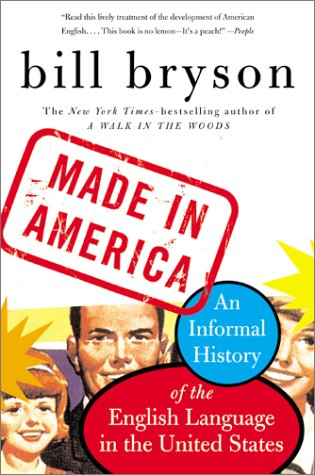
I consider this a fushigi* because not only does his critique of capitalism correspond with one of the arguments I will be presenting in the course, but more amusingly it absolutely corresponds to my first 'Found Economics', which came from Bill Bryson's Made in America
The dropping of atomic bombs on Hiroshima and Nagasaki marked the end of one war and the beginning of another: the cold war. The cold may not have generated a lot of casualties, but it was nonetheless the longest and costliest war America has ever fought. War was unquestionably good for business – so good that in 1946 the president of General Electric went so far as to call for a 'permanent war economy.' he more or less got his wish. Throughout the 1950s,America spent more on defense than it did on anything else – indeed, almost as much as it did on all things together. By 1960, military spending accounted for 49.7 percent of the federal budget – more than the combined national budgets of Britain, France, West Germany, and Italy. Even America's foreign aid was overwhelmingly military. Of the $50 billion that America distributed in aid in the 1950s, 90 percent was for military purposes (p300-1).
With these two ideas juxtaposed, I will be generating an optional short essay question comparing the ideas these quotations are presenting.

Monday, November 15, 2010

Made in America — Continues with Economic Lessons — 2010.11.15

I am continuing to thoroughly enjoy Bryson's Made in America. He demonstrates in a way that words cannot convey, that language, in this case the English language, is alive like a giant garden — the masters of English are constantly weeding, trimming, hedging, and 'improving' the garden, but Nature is constantly adding to it in the wild untamed corners, poking weeds and shrubs into the garden, especially its edges, with wanton abandon and joy.

And in his typical fashion, Bryson makes comments about society as he is examining of the evolution of the society's language and words. I am putting together an 3-day economics course for my local Continuing Education programme. Shortly after receiving confirmation of the course approval, I read the following, which I'll be incorporating into my course and/or reading materials:

The dropping of atomic bombs on Hiroshima and Nagasaki marked the end of one war and the beginning of another: the cold war. The cold may not have generated a lot of casualties, but it was nonetheless the longest and costliest war America has ever fought. War was unquestionably good for business — so good that in 1946 the president of General Electric went so far as to call for a 'permanent war economy.' he more or less got his wish. Throughout the 1950s, America spent more on defense than it did on anything else — indeed, almost as much as it did on all things together. By 1960, military spending accounted for 49.7 percent of the federal budget — more than the combined national budgets of Britain, France, West Germany, and Italy. Even America's foreign aid was overwhelmingly military. Of the $50 billion that America distributed in aid in the 1950s, 90 percent was for military purposes ( p300-1).

I am building a web page this course, which I've called Economics Demystified. [At the time of this blog, the web page is still under construction, and will be for a month or two more.] Anyway, within Economics Demystified I have created a page called 'Found Economics.' And I am including the above as my first example of a non-economist commenting on economics outside of a formal economic context.