Showing posts with label Bill Bryson. Show all posts

Sunday, December 5, 2010

The Collected Essays, Journalism & Letters of George Orwell V2: Visited 2010.12.04

The other day I dipped into Orwell's Collected essays. I first opened it 2009.03.28, with full awareness that this was a book to be dipped into when whim fancied it. 
Penguin Books 1970. (No ISBN in my copy.)

My whim took me to an interesting page because it, fushigi*-like, ties in with the economics course I am writing. The course, which I've called it 'Economics Demystified,' [link not live to the web yet], has been contracted by my local Continuing Education program. So I'm now moiling over the course details, and a part of that moiling has resulted in my including on the course's web page that I'm creating, a page called 'Found Economics.' As a result of my little dip into Orwell, I have now, with chance and fingers, found my second inclusion:
The history of British relations with Mussolini illustrates the structural weakness of a capitalistic state. Granting that power politics are not moral, to attempt to buy Italy out of the Axis — and clearly this idea underlay the British policy from 1934 onwards — was a natural strategic move. But it was not a move which Baldwin, Chamberlain and the rest of them were capable of carrying out. It could only have been done by being so strong that Mussolini would not dare to side with Hitler. This was impossible, because an economy ruled by the profit motive is simply not equal to re-arming on a modern scale. Britain only began to arm when the Germans were in Calais. Before that, fairly large sums had, indeed, been voted for armaments, but they slid peaceably into the pockets of the shareholders, and the weapons did not appear. Since they had no intention of curtailing their own privileges, it was inevitable that the British ruling class should carry out every policy half-heartedly and blind themselves to the coming danger. But the moral collapse which this entailed was something new in British politics. In the nineteenth and early twentieth centuries, British politicians might be hypocritical, but hypocrisy implies a moral code. It was something new when Tory M.P.s cheered the news that British ships had been bombed by Italian aeroplanes, or when members of the House of Lords lent themselves to organized campaigns against the Basque children who had been brought here as refugees (365-6).

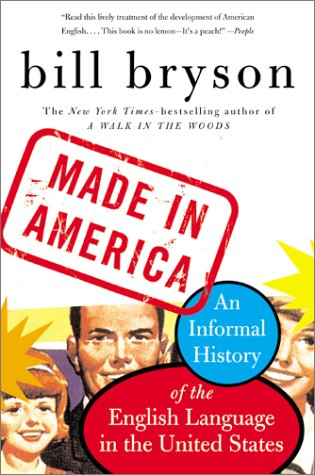
I consider this a fushigi* because not only does his critique of capitalism correspond with one of the arguments I will be presenting in the course, but more amusingly it absolutely corresponds to my first 'Found Economics', which came from Bill Bryson's Made in America
The dropping of atomic bombs on Hiroshima and Nagasaki marked the end of one war and the beginning of another: the cold war. The cold may not have generated a lot of casualties, but it was nonetheless the longest and costliest war America has ever fought. War was unquestionably good for business – so good that in 1946 the president of General Electric went so far as to call for a 'permanent war economy.' he more or less got his wish. Throughout the 1950s,America spent more on defense than it did on anything else – indeed, almost as much as it did on all things together. By 1960, military spending accounted for 49.7 percent of the federal budget – more than the combined national budgets of Britain, France, West Germany, and Italy. Even America's foreign aid was overwhelmingly military. Of the $50 billion that America distributed in aid in the 1950s, 90 percent was for military purposes (p300-1).
With these two ideas juxtaposed, I will be generating an optional short essay question comparing the ideas these quotations are presenting.

Friday, November 26, 2010

Made in America — Finished 2010.11.24


Began 2010.10.17
Secondary comment 2010.11.15.

Much, MUCH, MUCH more than a history of the English language in America! Bryson with magical and funny writing links the evolution of language with the evolution of culture, science, recreation, food, politics. His controversial or almost heretical debunkings of accepted history are supported with an extensive bibliography of the sources.

The debunking is endless! Barely a page was turned that didn't leave me amazed at how much I don't know, and just how far away from documented history is the accepted and taught history of just about every aspect of the Europeans' settlement of the 'new' world. About the only thing somewhat factually correct about the white man's settlement of North America is that Europeans came and decimated and displaced the natives. As an example, one of the unknown reasons that the Natives were able to help the first American settlers was that one of them spoke very good English. That synopsis does Bryson's writing a severe injustice, so here is his (slightly abbreviated) telling:

... Before long, as every [American] schoolchild knows, the Pilgrims were thriving, and Indians and settlers were sitting down to a cordial Thanksgiving feast. Life was grand.

A question that naturally arises is
how they managed this. Algonquian, the language of the eastern tribes, is an extraordinarily complex and agglomerative tongue... full of formidable consonant clusters that are all but unpronounceable by the untutored...

...The answer, surprisingly glossed over by most history books, is that the Pilgrims didn't have to learn Algonquian for the happy and convenient reason that Samoset and Squanto spoke English — Samoset only a litte, but Squanto with total assurance (and some Spanish into the bargain.)
(4)
I also learned that the so-called Christian purity that, amongst other things, has been accused of distorting American English into using euphemism in place of body part words, originally spoke sexually explicit language enough to make fans of Playboy blush. And, even more astonishing, that the Puritans actively encouraged premarital sex in the 18th century as an accepted method of testing physical compatibility.
Sex among the Puritans was considered as natural as eating, and was discussed about as casually, to the extent that, the historian David Fischer writes, 'the writings of the Puritans required heavy editing before they were thought fit to print even in the mid-twentieth century.' Premarital intercourse was not just tolerated but was effectively encouraged. Couples who intended to marry could take out something called a pre-contract — in effect, a license to have sex. It was the Puritans, too, who refined the intriguing custom of bundling, or tarrying as it was also often called, in which a courting pair were invited to climb into bed together...

As one seventeenth-century observer explained it: 'When a man is enamoured of a young women, and wishes to marry her, he proposes the affair to her parents; if they have no objections they allow him to tarry the night with her, in order to make his court with her. After the young ones have sat up as long as they think proper, they get into bed together, also without pulling of their undergarments in order to prevent scandal. If the parties agree it is all very well; the banns are published and they are married without delay. If not they part, and possibly never see each other again; unless, which is an accident that seldom happens, the forsaken fair proves pregnant, and then the man is obliged to marry her.'

...Although never expressly countenanced, fornication was so common in Puritan New England that at least one parish had forms printed up in which the guilty parties could confess by filling in their names and paying a small fine... "
(305-6).
Bryson defrocks most of Kroc's reputed claims to fame, critically examines myths around the evils of immigrants, suggests that one of the best living examples of how 'real' English may have been spoken is to listen to Yosemite Sam, points out that the famous 'That's one small step for man, one giant leap for mankind' was in fact the miss-heard version of 'That's one small step for a man, one giant leap for mankind.' Bryson also wades into the issue of politically correct language with intelligence, diplomacy, and razor sharp observations — and, of course, humour.

This books re-affirms the vivifying joy and beauty and aliveness of the English language. A gem of a book, and one I will now go out and buy.
  

Monday, November 15, 2010

Made in America — Continues with Economic Lessons — 2010.11.15

I am continuing to thoroughly enjoy Bryson's Made in America. He demonstrates in a way that words cannot convey, that language, in this case the English language, is alive like a giant garden — the masters of English are constantly weeding, trimming, hedging, and 'improving' the garden, but Nature is constantly adding to it in the wild untamed corners, poking weeds and shrubs into the garden, especially its edges, with wanton abandon and joy.

And in his typical fashion, Bryson makes comments about society as he is examining of the evolution of the society's language and words. I am putting together an 3-day economics course for my local Continuing Education programme. Shortly after receiving confirmation of the course approval, I read the following, which I'll be incorporating into my course and/or reading materials:

The dropping of atomic bombs on Hiroshima and Nagasaki marked the end of one war and the beginning of another: the cold war. The cold may not have generated a lot of casualties, but it was nonetheless the longest and costliest war America has ever fought. War was unquestionably good for business — so good that in 1946 the president of General Electric went so far as to call for a 'permanent war economy.' he more or less got his wish. Throughout the 1950s, America spent more on defense than it did on anything else — indeed, almost as much as it did on all things together. By 1960, military spending accounted for 49.7 percent of the federal budget — more than the combined national budgets of Britain, France, West Germany, and Italy. Even America's foreign aid was overwhelmingly military. Of the $50 billion that America distributed in aid in the 1950s, 90 percent was for military purposes ( p300-1).

I am building a web page this course, which I've called Economics Demystified. [At the time of this blog, the web page is still under construction, and will be for a month or two more.] Anyway, within Economics Demystified I have created a page called 'Found Economics.' And I am including the above as my first example of a non-economist commenting on economics outside of a formal economic context.

Thursday, October 28, 2010

Made in America: An Informal History of the English Language in the United States — Begun 2010.10.17

After finishing Bryson's Shakespeare: The World as a Stage a couple of weeks ago, and loving it; and after having been blown away by his The Life and Times of the Thunderbolt Kid; my friend BV clomped into work with two more Bryson books — In a Sunburned Country and
Bill Bryson.
Made in America: An Informal History of the English Language in the United States.
New York: Perennial (HarperCollins), 2001.


Of the two I chose this one first for two reasons. What better book to follow up on his Shakespeare book and Mair's Tao Te Ching with its fascinating etymological journey. The second reason is my enjoyment of the English language, its uses, abuses, creativity, and pure 'dance-ability.'

I'm on page 190 300 or so, as I write this, and it is brilliant! And not just because it is an engaging, interesting, entertaining and humorous history, but because of the ostensibly heretical history Bryson seamlessly incorporates into the narrative. I love learning that everything, and mean EVERYTHING I was taught or have learned about the history of the European's entry into the Americas is wrong. Okay, okay, so Europeans settled here and effectively wiped out the aboriginals in one way or the other — but that is pretty much the sum total what has at least a grain of historical truth from my schooling both formal and informal.


And, very amusingly, it has provided, to date, two amusing fushigis, or synchronicity-petites; the first about the train porters of American all being called George; and now about 'jerk' chicken.


☆ ☆ ☆ ☆ ☆


And what makes this, my reading Bryson from book's borrowed from BV, is that back in 2003-4 BV pestered me about reading Bryson!

Sunday, October 10, 2010

Shakespeare: The World as a Stage — Finished 2010.10.07


A delightful, funny, shocking, interesting, learned and wonderful read. I found particularly amusing the final chapter, in which Bryson de-bunks the Shakespeare debunkers — which have included Orson Wells, Derek Jacobi, Sigmund Freud, Mark Twain, and more than a few others despite an overwhelming lack of evidence or even clear arguments.

Anyway, here is a nice sample of Bryson's writing from that final chapter:
... in 1918 a schoolmaster from Gateshead, in north-east England, with the inescapably noteworthy name of J. Thomas Looney, put the finishing touches to his life's work, a book called Shakespeare Identified, in which he proved to his own satisfaction that the actual author of Shakespeare was the seventeenth Earl of Oxford, one Edward de Vere. It took him two years to find a publisher willing to publish the book under his own name. Looney steadfastly refused to adopt a pseudonym, arguing, perhaps just a touch desperately, that his name had nothing to do with insanity and was in fact pronounced loney. (Interestingly, Looney was not alone in having a mirthful surname. As Samuel Schoenbaum once noted with clear pleasure, other prominent anti-Stratfordians of the time included Sherwood E. Silliman and George M. Battey (p186).)

Bryson describes how this whole anti-Stratford movement appears to have gotten started by an unstable  American woman with the surname Bacon and charm enough to get money to travel to England and for an extended multi-year period, do research without talking to people. The trip proved to her mind that Francis Bacon was the author, although she did not actual state that in her book but rather inferred it.

Reading this is very amusing! The more so because a few years ago one of my co-workers dropped off some documents that contained links to proofs that Shakespeare's words were the work of someone else. But of course they didn't actually prove anything. JB found it amusing to try to stir me up, given my organizing annually for my work mates a group trip to our local Shakespeare festival. Anyway, he made the argument that '... historically it doesn't make sense that Shakespeare wrote what he did' he argued in similar vein to all anti-Stratfordians. (I think it a weak argument, but it would seem that others like it.)

'So, JB,' I asked him, 'have you read any Bacon or Marlowe?' These were the two with intellect and education enough to be the 'real' Shakespeare in his research.

'No,' he said, 'I'm looking at this strictly from an historical perspective.'

'Well, JB,' I responded, 'I have read both those writers — and they did not write the words that the world ascribes to Shakespeare. Bacon's writing is pontifical dreck and Marlowe's is black and lacking the depth of human understanding you get from Shakespeare.'

Paul Budra, Professor of English @ SFU,  was asked to express his opinion on the matter  at a well attended lecture at Vancouver's Bard-on-the-Beach Shakespeare festival a few years ago. (The tone of the querent suggested that he was one of the anti-Stratfordians.) Prof. Budra's answer was short and to the point: 'I am open to that possibility. However, there is not one single piece of evidence in existence, not even a tiny one despite years of painstaking research, that would indicate that anyone else wrote these plays. On the other hand, there is a great deal of direct evidence that he did.'

☆ ☆ ☆ ☆ ☆
Bill Bryson.Shakespeare: The World as a Stage. London, GB: Harper Perennial 2008. ISBN: 000719790X.

Sunday, June 27, 2010

The Life and Times of the Thunderbolt Kid &mdash Finished 2010.06.01

A friend and co-worker 'forced' me to read Bill Bryson's The Life and Times of the Thunderbolt Kid: A Memoir. When I say forced, I mean B. used  moral suasion — I have foisted on her — at her request! — many books from my library, and she felt it was time for me to read something of hers. And so I was stuck reading Thunderbolt Kid.

Bill Bryson.
The Life and Times of the Thunderbolt Kid: A Memoir.
Anchor Canada (Random House), 2007.
ISBN: 9780385661621.

What an excellent stuckedness this turned out to be!


Because B. recommended the book, I thought I'd enjoy it. What I did not expect was how excellent a read this turned out to be! And I don't mean to diminish the value of B.'s book judgement, especially given that she has liked to the point of buying more than one of the books she's read from my library. It's just that I am busy reading other things — and working and living — and didn't feel I had the time to read something not of my choosing.

But the world does work in mysterious ways. It turned out that Bryson is a very, very clever writer, because the book is NOT a memoir. I mean, it IS a memoir, but one that views with love and compassion and, atypically, unsentimental acuity the fables, foibles and hypocrisies of 1950s American middle class way of life. Bryson with great humour and compassion delineates how the USA failed, even in that golden age, to live up to the idealistic image it has of itself as a model Christian-kind society.

The chapters are set-up by introductory photos and/or news clips from his home town's paper The Des Moines Register. Two chapters stand out. Chapter 4, 'The Age of Excitement'  starts:
 PRE-DINNER DRINKS WON'T HARM HEART, STUDY SHOWSPHILADELPHIA, PENN. (AP) — A couple of cocktails before dinner, and maybe a third for good measure, won't do your heart any harm. In fact, they may even do some good. A research team at Lankenau Hospital reached this conclusion after a study supported in part by the Heart Association of Southeastern Pennsylvania.
 — The Des Moines Register, August 12, 1958.

On the next page is displayed a Camel cigarette print ad containing a smiling doctor with a stethoscope around his neck and a cigarette in hand. Below him is Times Roman fully capitalized and italicized 36 font text's that claims 'MORE DOCTORS SMOKE CAMELS THAN ANY OTHER CIGARETTE!' 

Bryson's prose to open the chapter begins:
I don't know how they managed it, but the people responsible for the 1950s made a world in which pretty much everything was good for you. Drinks before dinner? The more the better! Smoke? You bet! Cigarettes actually made you healthier, by soothing jangly nerves and sharpening jaded minds, according to the advertisements. ... X-rays were so benign that shoe stores installed special machines that used them to measure foot sizes, sending penetrating rays up through the soles of your feet and right out the top of your head.
...
Happily, we were indestructible....People were charmed and captivated — transfixed, really — by the broiling majesty and unnatural might of atomic bombs. When the military started testing nuclear weapons at a dried lakebed called Frenchman Flat in the Nevada desert outside Las Vegas it became the town's hottest tourist attraction. People came to Las Vegas not to gamble — or at least not only to gamble — but to stand on the desert's edge and feel the ground shake beneath their feet, and watch the air before them fill with billowing pillars of smoke and dust. 
... 
As many as four nuclear detonations a month were conducted in Nevada in the peak years. The mushroom clouds were visible from any parking lot in the city [of the 1950s], but most visitors went to the edge of the blast zone itself, often with picnic lunches, to watch the tests and enjoy the fallout afterwards. And these were big blasts. Some were seen by airline pilots hundreds of miles out over the Pacific Ocean. Radioactive dust often drifted across Las Vega, leaving a visible coating on every horizontal surface. After some of the early tests, government technicians in white lab coats went through the city with Geiger counters over everything. People lined up to see how radioactive they were. It was all a part of the fun. What a joy it was to be indestructible (67-73). 

Chapter 6 BOOM! opens with:
 Mobile, Ala. — The Alabama Supreme Court yesterday upheld a death sentence imposed on a Negro handyman, Jimmy Wilson, 55, for robbing Mrs. Esteele Barker of $1.95 at her home last year. Mrs. Barker is white. Although robbery is a capital offence in Alabama, no one has been executed in the state before for a theft of less than $5. A court official suggested that the jury had been influenced by the fact Mrs. Barker told the jury that Wilson had spoken to her in a disrespectful tone. A spokesman for the National Associate for the Advancement of Colored People called the death sentence 'a sad blot on the nation,' but said the organization is unable to aid the condemned man because it is barred in Alabama.
The Des Moines Register, August 23, 1958. 

The chapter then continues with the US testing of atom bombs in the Marshall Islands, and, most significantly, their largest fusion bomb test on the still uninhabitable Bikini atoll, the namesake of the bikini bathing suit.

In his clear-eyed but lovingly expressed honesty, The Thunderbolt Kid rises far above being a mere sentimental memoir to become a perceptive social commentary and critique of an immature superpower.

A well deserved 5 stars.

And it is very funny!


P.S.: Bryson describes his experiences as a paper delivery boy. And here we share a common experience! Like him, I learned a fundamental social truth from that experience, which is that the bigger was the house that I delivered to, the smaller was the tip I received. And, like him, whenever I went to collect from the biggest house on my route, I was without exception in more than two years of reliable service to that house, sent home empty handed every month. The resident month after month 'kindly' asked to come back the next day for my $2.50. And when I did, I went home paid, but without a tip. Hmmmm. I have been skeptical every since of the rich running the world, and every year confirms that youthful lesson in the power of avarice. The American government's reaction to their greedy bankers destroying their society's economy to line their pockets is to give them a government bailout instead of prison sentences. Meanwhile the average American struggles with the fall out.